da·ta –noun
1. a pl. of datum.
2. ( used with a plural verb ) individual facts, statistics, or items of information: These data represent the results of our analyses. Data are entered by terminal for immediate processing by the computer.
3. ( used with a singular verb ) a body of facts; information: Additional data is available from the president of the firm.
fet·ish –noun
1. an object regarded with awe as being the embodiment or habitation of a potent spirit or as having magical potency.
2. any object, idea, etc., eliciting unquestioning reverence, respect, or devotion: to make a fetish of high grades.
The other day I was sitting in a conference about something or other (most likely about consulting or marketing) and after about an hour of patiently waiting for knowledge to come pouring down from my orators mouth into my open mind, I looked down at my paper and realized that the only thing I had written was 'Data Fetish'. Reviewing the presentation in my mind I could only recall a dizzying flurry of numbers and statistics and thinking 'So what's the point?' To quote Marshal McLuhan the medium has for many organizations become the message and in this case the medium is numbers. I think in the nonprofit space there is an interesting bifurcation into two camps, one camp of people running the mom and pop nonprofits with no data tracking systems at all and no idea of what to do with the data once it was tracked and then another camp of people (probably mostly at foundations) with a full fledged Data Fetish, who simply can't make a decision without looking at a complex excel model.
Frankly I don't think either end of the spectrum is particularly right. Those data agnostic are often operating with either a total ignorance of the power of data (and as such wasting precious resources) or operating with a fear of what the numbers will tell them (and as such wasting precious resources). The data fetishist are convinced that their numbers are the god's own truth (totally forgetting that the numbers could be wrong or were derived from completely bat shit wild guesses and baseless assumptions) or are so fixated with getting the data that important decisions are tabled until this magic-cure-all data can be found (and as such, wasting precious resources).
I think the answer lies somewhere in the middle. Don't get me wrong, I'm as evidence driven as the next fancy pants management consultant but I never forget that data is just a tool that informs one's judgement - it is NOT the judgement - and I also remember that judgement without a base of information is just some crazy bat shit guess.
So what's the answer? Well it lies somewhere between my two favorite quotes:
"It is not enough to do your best. First you must know what to do, and then do your best"
&
"A good plan in time is better than a great plan too late"
-C
Tuesday, July 27, 2010

Friday, July 9, 2010
On foxes, scorpions, and black babies
Once there was a fox about to cross a river. On the banks of the river sat a scorpion. Doing it’s best to avoid scorpion, the fox prepared to make his crossing, when, surprisingly the scorpion called out to the fox. “Mr Fox,” the scorpion said, “would you please carry me across the water? I desperately need to get to the other side and I can not swim.” 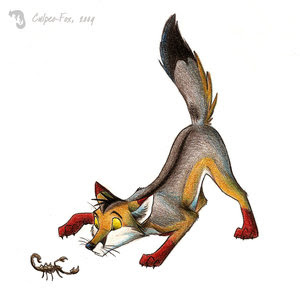 The fox crinkled its orange brow and shrewdly said, “But I am a fox, and you are a scorpion!Were I to allow you on my back, you’d simply sting me”. “Not true,” the scorpion replied, “for I will only climb upon you once you get into the water, and were I to sting you once we're in the water we would both drown. Frankly, I have no desire to drown.” The scorpions logic seemed sound and the fox agreed to give him a ride. The fox entered the water, the scorpion climbed upon the foxes back, and the fox began to swim. When the fox made it about half way across the water, the scorpion strung the fox and injected him with poison. The fox, dumbfounded, looked back to the scorpion and asked “Why? Why would you sting me and doom us both?”. As the fox began to drown (along with the scorpion) the scorpion replied “because I am a scorpion”.
I saw an ad the other day that made me think of that ancient fable.


The fox crinkled its orange brow and shrewdly said, “But I am a fox, and you are a scorpion!Were I to allow you on my back, you’d simply sting me”. “Not true,” the scorpion replied, “for I will only climb upon you once you get into the water, and were I to sting you once we're in the water we would both drown. Frankly, I have no desire to drown.” The scorpions logic seemed sound and the fox agreed to give him a ride. The fox entered the water, the scorpion climbed upon the foxes back, and the fox began to swim. When the fox made it about half way across the water, the scorpion strung the fox and injected him with poison. The fox, dumbfounded, looked back to the scorpion and asked “Why? Why would you sting me and doom us both?”. As the fox began to drown (along with the scorpion) the scorpion replied “because I am a scorpion”.I saw an ad the other day that made me think of that ancient fable.

This is one of the 65 ads that went up in Georgia last February (Black History month). It’s an ad by the Radiance Foundation (an organization that is being funded by ‘Georgia right to life’) and the campaign is based around the idea that that abortion clinics like planned parenthood have an agenda to exterminate black babies. Normally ads just piss me off because they suck so much, this ad (and campaign) is different, this ad offends me, deeply. I make no effort to be bipartisan nor do I pretend to be objective in my views on this blog. I think women should have the right to have abortions, I think people are equal even though situations are unequal, I think watching someone fall and injure themselves on youtube is funny and, while this campaign assails two of those beliefs, that is not the main reason this campaign offends me.
This campaign uses the veneer of nonprofit marketing, marketing that is essentially there to “do good”, to pass on a poisonous lie. One that strives to make African American women more fearful of getting the help that they need, one that tries to position well respected organization like Planned Parenthood as a white conspiracy to exterminate black babies, and one that racistly depicts black women as dupes and black babies as animals (endangered species?!?!). I believe that people have the freedom to say what they want, and while I disagree with some messages and with standpoints, I want them to say it well. I feel that advertising and marketing have the obligation to tell the truth, ads that blatantly sell lies and encourage dangerous behaviors do not have the right to life and should be aborted while still in their creators minds. Mass marketing, like journalism, is too powerful a tool to be infused with lies and it is up to responsible professionals to fight back. To steal the motto from McCann Erickson, advertising should be “truth well told”, not fearmongering well funded.
This campaign uses the veneer of nonprofit marketing, marketing that is essentially there to “do good”, to pass on a poisonous lie. One that strives to make African American women more fearful of getting the help that they need, one that tries to position well respected organization like Planned Parenthood as a white conspiracy to exterminate black babies, and one that racistly depicts black women as dupes and black babies as animals (endangered species?!?!). I believe that people have the freedom to say what they want, and while I disagree with some messages and with standpoints, I want them to say it well. I feel that advertising and marketing have the obligation to tell the truth, ads that blatantly sell lies and encourage dangerous behaviors do not have the right to life and should be aborted while still in their creators minds. Mass marketing, like journalism, is too powerful a tool to be infused with lies and it is up to responsible professionals to fight back. To steal the motto from McCann Erickson, advertising should be “truth well told”, not fearmongering well funded.
I’ll end with an ad I like.

The format is clean, the headline is an easy and quick read, the call-to-action stands out, and most importantly, it's 'Truth well told'.
Tuesday, July 6, 2010
Finally an ad I don't hate
As I've begun to write this blog and actively critique the things around me (not that I don't always critique the things around me, I'm just normally keep them down to 3 word summaries like "That fucking sucks" or "God that's terrible") I've noticed that, for the most part, I think most ads suck. It is for that reason that I'm tickled pink (or as pink as a black man gets) when I see an ad for a good cause that doesn't suck. Case in point:

This ad doesn't suck. . . . thank god, something that doesn't suck.
Why doesn't it suck? Simple, because it's simple. Without going the gross out route and showing some poor bikers head splattered across the car (I'm talking to you "anti smoking" and "anti sugary drinks" ads) they get across the point that cars smash up bikers. Furthermore they give the viewer a simple, achievable action to do, to prevent smashing up a biker "look". Of course there are things to improve upon. The name of the org is blending into the background and it's hard to see the website, but come on, who goes to the website anyway? Do I really want to learn more about how not to smash a biker while I'm driving? No not really. It's a minor technical point and certainly not enough to make the ad suck.
Good job whoever made this ad, you reminded me of the one key truth of advertising: Ads don't have to suck, it's just that most of the time ads are made by people that suck.

This ad doesn't suck. . . . thank god, something that doesn't suck.
Why doesn't it suck? Simple, because it's simple. Without going the gross out route and showing some poor bikers head splattered across the car (I'm talking to you "anti smoking" and "anti sugary drinks" ads) they get across the point that cars smash up bikers. Furthermore they give the viewer a simple, achievable action to do, to prevent smashing up a biker "look". Of course there are things to improve upon. The name of the org is blending into the background and it's hard to see the website, but come on, who goes to the website anyway? Do I really want to learn more about how not to smash a biker while I'm driving? No not really. It's a minor technical point and certainly not enough to make the ad suck.
Good job whoever made this ad, you reminded me of the one key truth of advertising: Ads don't have to suck, it's just that most of the time ads are made by people that suck.
Tuesday, June 29, 2010
In celebration of Pride Month
As some of you may or may not know, this month is pride month and, while I was too busy moving and painting my new office to go out and enjoy the festivities last Sunday at NYC pride, I've decided to celebrate pride by featuring the latest ad by SAGE

This is really a god awful ad. God awful.
Firstly the art direction is terrible. I don't know where to look or what to look at. Are there three vertical stories or am I supposed to read it like a cartoon strip? Also why are those people in those retarded positions? Who stands like that? Furthermore, for the images at the bottom, why are the faces so close? It looks like that first bald guy is going to try to eat that other guys brains or like that lady in the last frame is pondering that old guys nose hairs. It's just terrible. Even if you can move past the terrible art, the copy is horrendous. It's like they're trying to trick me into reading a tiny confusing book. I can't tell where to start or where to end. The call to action is crazy small (yeah, it's there all the way at the end) and then you have those two huge logo's taking up 20% of the image. Once again I'm confused. I can't tell if this is a Sage ad or a SageCap ad, or even how they interplay.
This is what the ad needs to do 1) Pick one of those six images and stick with it, before and after only works with weight loss ads - and they especially don't work when the 'before' picture is the same as the 'after' picture 2) Cut down the copy - nonprofits are always trying to do a million things at once, just do one thing really well 3) Come up with some kind of a headline (duh) 4) stop making the logo's compete - pick one 5) bump up the call to action and 6) cut down on the copy - I'm not here to read your brochure, even if you disguise it as an ad (I know I said that earlier but it should be repeated).
This is a classic example of one ad trying to do too much and ending up failing miserably. As always K.I.S.S. - Keep It Simple Stupid.

This is really a god awful ad. God awful.
Firstly the art direction is terrible. I don't know where to look or what to look at. Are there three vertical stories or am I supposed to read it like a cartoon strip? Also why are those people in those retarded positions? Who stands like that? Furthermore, for the images at the bottom, why are the faces so close? It looks like that first bald guy is going to try to eat that other guys brains or like that lady in the last frame is pondering that old guys nose hairs. It's just terrible. Even if you can move past the terrible art, the copy is horrendous. It's like they're trying to trick me into reading a tiny confusing book. I can't tell where to start or where to end. The call to action is crazy small (yeah, it's there all the way at the end) and then you have those two huge logo's taking up 20% of the image. Once again I'm confused. I can't tell if this is a Sage ad or a SageCap ad, or even how they interplay.
This is what the ad needs to do 1) Pick one of those six images and stick with it, before and after only works with weight loss ads - and they especially don't work when the 'before' picture is the same as the 'after' picture 2) Cut down the copy - nonprofits are always trying to do a million things at once, just do one thing really well 3) Come up with some kind of a headline (duh) 4) stop making the logo's compete - pick one 5) bump up the call to action and 6) cut down on the copy - I'm not here to read your brochure, even if you disguise it as an ad (I know I said that earlier but it should be repeated).
This is a classic example of one ad trying to do too much and ending up failing miserably. As always K.I.S.S. - Keep It Simple Stupid.
Tuesday, June 15, 2010
Who uses direct mail anyway?
As you could probably imagine. I'm a big fan of social media. I think it's one of the great equalizers and allows even the most meager budgets to extend far into the donor/consumer market. That being said, I also love seeing new uses of old media. So show me a creative use of a billboard or a great TV spot (like the Nike one that has all of the soccer players imagining what happens if they screw up the next play) and I'm in love. That being said, last week I got this in the mail.

It's a piece of mail soliciting a donation but what's interesting about it is that it has a nickel in it. Maybe I'm a sucker for cheap gimicks but I opened it and learned, much to my surprise, that a nickle was more money than the government now gives per patient to fund cancer research (thanks for the info Memorial Sloan Kettering). I get a ton of junk mail and even more spam, and frankly, I never, ever open them but low and behold, I opened this piece of mail. I opened it because it did something very simple: it triggered my curiosity. Now I'd be lying if it compelled me to give (I didn't) but it did get me to open it, and that's a lot. I think the question we need to ask ourselves as marketers is, how can I trigger my donors/consumers curiosity? Everything now is all about how marketing is dead and the world is totally driven by consumers going out and finding specific pieces of information but what gets them to find these specific pieces of information? Curiosity.
How can we make people curious? What blocks their curiosity? And then, once they've given into their curiosity, how can we inspire them to act? That needs to be our driving mantra, our reason to exist. The media doesn't matter, at the end of the day, it's all the same.
(shit, I went though an entire post without cursing once. I must be getting old.)

It's a piece of mail soliciting a donation but what's interesting about it is that it has a nickel in it. Maybe I'm a sucker for cheap gimicks but I opened it and learned, much to my surprise, that a nickle was more money than the government now gives per patient to fund cancer research (thanks for the info Memorial Sloan Kettering). I get a ton of junk mail and even more spam, and frankly, I never, ever open them but low and behold, I opened this piece of mail. I opened it because it did something very simple: it triggered my curiosity. Now I'd be lying if it compelled me to give (I didn't) but it did get me to open it, and that's a lot. I think the question we need to ask ourselves as marketers is, how can I trigger my donors/consumers curiosity? Everything now is all about how marketing is dead and the world is totally driven by consumers going out and finding specific pieces of information but what gets them to find these specific pieces of information? Curiosity.
How can we make people curious? What blocks their curiosity? And then, once they've given into their curiosity, how can we inspire them to act? That needs to be our driving mantra, our reason to exist. The media doesn't matter, at the end of the day, it's all the same.
(shit, I went though an entire post without cursing once. I must be getting old.)
Friday, June 4, 2010
Brand Vampires and BP
Thursday I came back from some training in LA, and I pleasantly got a chance to meet up with one of my friends I met a while back. His name is Jay and he's in charge of marketing at Toms' Shoes (http://www.toms.com/). It's actually a really amazing org, that's built around the notion that whenever you buy a pair of their shoes, they donate a pair of shoes to someone in need. So while knocking back a beer or two, he told me how companies will call him up looking to partner with Toms without having any real sense of what the partnership should be about or how it should work. During our chat, I mentioned that sometimes companies are really just brand vampires looking to suck good halo from socially conscious organizations, while others are a really good fit. So after we parted I began to think about it a little more and figured that there has to be an easy way to quickly separate these brand vampires from other brands that were just brothers from other mothers.
To that end, I've created the matrix below, to help nonprofits and socially conscious organizations to evaluate how to handle a potential partnership with another brand.

Along the bottom is the estimation of how aligned the value and personality of the brands, along the side is how aligned the mission and the product are. If your mission fits with their product then you're in the high mission and product alignment zone, if your values and personality matches with their values and personality you're in the high value and personality alignment zone, and so on. In each box I put a little phrase to capture the essence of the relationship and in parentheses I put how the two org brands should interact ( either equal partners, endorsers, invisible)
1)High mission and product alignment and high value and personality alignment: These are the matches made in heaven, not only should you team up, you should say it "loud and proud". Think when about Feeding America (used to be called America's Second Harvest) and General Mills teamed up to donate a pound of food to each pound the viewers of The Biggest Loser pledge to loose. These brothers from different mothers should team up in an equal partnership.
2) High mission and product and low value and personality alignment: These also normally pretty good matches. An easy example I can think of is when Tom's shoes teamed up with the Red Cross to get shoes to the victims of the earthquake in Haiti. Both brands are there to help those in need and by teaming up they were able to provide a bundle of good to those that need it. Often one brand acting as the endorser of another brand is the best way to go (i.e. "The Red Cross with the support of Tom's shoes has delivered. . ." ). Both brands can, and should, be out front.
3) Low mission and product alignment and high value and personality alignment. These can be pretty complex since, the products are so different but as we can see from Product Red, it's very doable. Since the products and the missions are so divergent the best way to tackle these are with a new initiative (like Red) where a bunch of diverse entities come together for a worthy cause to make a change. Anything outside of a new initiative will come off as pretty artificial but the brands should still exist as proud endorsers of this new entity.
4) Low mission and product alignment and low value and personality alignment. Ugh. . . this is like Transylvania, where all the brand vampires live. 9 times out of 10 this is a bad idea, but sometime vampires have deep pockets and the good you can do with that money is worth the risk or outside forces demand the partnership. The thing that pops into my mind for this case is the truth campaign (which is funded by the cigarette industry). The partnership should be a new initiative (with a new brand) and both the nonprofit and the for-profit should remain as invisible as possible. The for-profit would do it for the good of internal moral (or because they are forced to) and the nonprofit should do it because of the impact that can be created. In the perfect world, the viewer would never know who pays the bills (which is part of what made it so hard for me to come up with a good example).
These aren't hard and fast rules but they'll definitely help you navigate some complex situations.
Also, I guess I should talk about BP since I promised in the headline I would. I actually find it really interesting that I'm hearing a lot of talk about the BP ads and how messed up it is that BP made those ads. Something that I'm actually not hearing a lot of is what people think they would have done if they were BP's head of marketing. So, being the forthright kind of guy that I am, I figured I'd stick my neck out and say what I'd do if I were in charge of BP's marketing. So what would I do? I'd quit. That guy (or gal) is fucked six ways to Sunday. Any ads that you put out will be construed as a waste of money and an attempt at spin, if you don't put out ads, you'll be seen as not communicating. So you, Mr or Ms Marketing exec, are up shits' creek (as my pappy used to say). Get a new job. In a few years, everyone will be back to their sweet, sweet oil dependency and BP will have rebranded itself and all will go back to normal, but you, Mr/Ms CMO, are screwed. Get over it. your company screwed the pooch and you're going to get boned. that's life sometimes. BP should keep making ads, should give constant and eternal 'mia culpas' and spend as much dough as possible to clean up this mess, but this is too big even for smart marketing to smooth over.
To that end, I've created the matrix below, to help nonprofits and socially conscious organizations to evaluate how to handle a potential partnership with another brand.

Along the bottom is the estimation of how aligned the value and personality of the brands, along the side is how aligned the mission and the product are. If your mission fits with their product then you're in the high mission and product alignment zone, if your values and personality matches with their values and personality you're in the high value and personality alignment zone, and so on. In each box I put a little phrase to capture the essence of the relationship and in parentheses I put how the two org brands should interact ( either equal partners, endorsers, invisible)
1)High mission and product alignment and high value and personality alignment: These are the matches made in heaven, not only should you team up, you should say it "loud and proud". Think when about Feeding America (used to be called America's Second Harvest) and General Mills teamed up to donate a pound of food to each pound the viewers of The Biggest Loser pledge to loose. These brothers from different mothers should team up in an equal partnership.
2) High mission and product and low value and personality alignment: These also normally pretty good matches. An easy example I can think of is when Tom's shoes teamed up with the Red Cross to get shoes to the victims of the earthquake in Haiti. Both brands are there to help those in need and by teaming up they were able to provide a bundle of good to those that need it. Often one brand acting as the endorser of another brand is the best way to go (i.e. "The Red Cross with the support of Tom's shoes has delivered. . ." ). Both brands can, and should, be out front.
3) Low mission and product alignment and high value and personality alignment. These can be pretty complex since, the products are so different but as we can see from Product Red, it's very doable. Since the products and the missions are so divergent the best way to tackle these are with a new initiative (like Red) where a bunch of diverse entities come together for a worthy cause to make a change. Anything outside of a new initiative will come off as pretty artificial but the brands should still exist as proud endorsers of this new entity.
4) Low mission and product alignment and low value and personality alignment. Ugh. . . this is like Transylvania, where all the brand vampires live. 9 times out of 10 this is a bad idea, but sometime vampires have deep pockets and the good you can do with that money is worth the risk or outside forces demand the partnership. The thing that pops into my mind for this case is the truth campaign (which is funded by the cigarette industry). The partnership should be a new initiative (with a new brand) and both the nonprofit and the for-profit should remain as invisible as possible. The for-profit would do it for the good of internal moral (or because they are forced to) and the nonprofit should do it because of the impact that can be created. In the perfect world, the viewer would never know who pays the bills (which is part of what made it so hard for me to come up with a good example).
These aren't hard and fast rules but they'll definitely help you navigate some complex situations.
Also, I guess I should talk about BP since I promised in the headline I would. I actually find it really interesting that I'm hearing a lot of talk about the BP ads and how messed up it is that BP made those ads. Something that I'm actually not hearing a lot of is what people think they would have done if they were BP's head of marketing. So, being the forthright kind of guy that I am, I figured I'd stick my neck out and say what I'd do if I were in charge of BP's marketing. So what would I do? I'd quit. That guy (or gal) is fucked six ways to Sunday. Any ads that you put out will be construed as a waste of money and an attempt at spin, if you don't put out ads, you'll be seen as not communicating. So you, Mr or Ms Marketing exec, are up shits' creek (as my pappy used to say). Get a new job. In a few years, everyone will be back to their sweet, sweet oil dependency and BP will have rebranded itself and all will go back to normal, but you, Mr/Ms CMO, are screwed. Get over it. your company screwed the pooch and you're going to get boned. that's life sometimes. BP should keep making ads, should give constant and eternal 'mia culpas' and spend as much dough as possible to clean up this mess, but this is too big even for smart marketing to smooth over.
Sunday, May 30, 2010
My own raven paradox.
Today's post is slightly different than more normal. Normally I like to review some ad I've seen or go on a tirade about something that I've seen/heard/did-to-an-innocent-bystander, but not today. Today is a bit of a stream of thought. It gets down to marketing towards the end but the trip is a little "over the river and through the bend" (nice rhyme).
Today was my second day of experienced consultant training with Bain and Co and, frankly, I've been out of the loop. I haven't really been checking my email, I've barely tweeted, and I've been doing my best to be present in the training (I mean, this stuff isn't cheap), but I, of course, can't stop daydreaming. So today, while I was supposed to be reviewing the best way to create a work plan (yeah, thrilling stuff, I know), I happened to look over and saw this bird standing on the ground.

I looked at it, it looked at me and suddenly I thought: "what the fuck is that?" Firstly on the more obvious level, is it a raven? is it a crow? A blackbird? I have no idea. But on a more fundamental level, why is it black? I mean most birds I know are bright and colorful and are chirpring. From my High School biology, as far as I know the colors help the birds stand out for mates, blend in to hide from predators or attack prey. Clearly since all the birds of this type are black it's not a sex thing, so is it a hide from predators/attack prey thing? Maybe, but if that was the case, why is it out in broad daylight? Wouldn't it make more sense for this bird to be hunting at night, in total blackness?

(picture of that same bird at night)
My consultant's soul screams out to me that this doesn't make sense!! It says, Cerrone, you hate things that don't make sense and this needs to be fixed. That bird needs to be brighter and green so it blends into the trees or grass or whatever.
So is a black bird in the middle of the day a paradox? I may not know a ton about nature but I do know that mother nature doesn't tolerate waste. So if this bird does fly and hunt and do its thing during the day, there has gotta be a reason and just because that reason isn't immediatily apparent to me, doesn't mean it's not a good reason. Maybe if I was whatever creature eats this bird or whatever creature this bird eats, the reason it's black and diurnal would be painfully obvious.
So how does this tie into marketing and nonprofits? easy. Nonprofits, marketers, business people, nearly everyone who looks at a problem and wants to solve it, wants to make a seemingly senseless situation make more sense, but we need to remember that just because it doesn't make sense to us, doesn't mean it doesn't make sense. We need to study the situation, put ourselves fully and totally into the scene, allow ourselves to see how it does make sense and then solve the problem that we feel as a member of the scene, and not the problem we felt as an outsider looking in. Maybe then we'd see that the raven doesn't have a problem at all or that the real problem the raven has isn't its color but the fact thats claws are too tiny?
So, I ask you this: are you solving your clients problems or are you solving the problem of the person watching your client?
Today was my second day of experienced consultant training with Bain and Co and, frankly, I've been out of the loop. I haven't really been checking my email, I've barely tweeted, and I've been doing my best to be present in the training (I mean, this stuff isn't cheap), but I, of course, can't stop daydreaming. So today, while I was supposed to be reviewing the best way to create a work plan (yeah, thrilling stuff, I know), I happened to look over and saw this bird standing on the ground.

I looked at it, it looked at me and suddenly I thought: "what the fuck is that?" Firstly on the more obvious level, is it a raven? is it a crow? A blackbird? I have no idea. But on a more fundamental level, why is it black? I mean most birds I know are bright and colorful and are chirpring. From my High School biology, as far as I know the colors help the birds stand out for mates, blend in to hide from predators or attack prey. Clearly since all the birds of this type are black it's not a sex thing, so is it a hide from predators/attack prey thing? Maybe, but if that was the case, why is it out in broad daylight? Wouldn't it make more sense for this bird to be hunting at night, in total blackness?

(picture of that same bird at night)
My consultant's soul screams out to me that this doesn't make sense!! It says, Cerrone, you hate things that don't make sense and this needs to be fixed. That bird needs to be brighter and green so it blends into the trees or grass or whatever.
So is a black bird in the middle of the day a paradox? I may not know a ton about nature but I do know that mother nature doesn't tolerate waste. So if this bird does fly and hunt and do its thing during the day, there has gotta be a reason and just because that reason isn't immediatily apparent to me, doesn't mean it's not a good reason. Maybe if I was whatever creature eats this bird or whatever creature this bird eats, the reason it's black and diurnal would be painfully obvious.
So how does this tie into marketing and nonprofits? easy. Nonprofits, marketers, business people, nearly everyone who looks at a problem and wants to solve it, wants to make a seemingly senseless situation make more sense, but we need to remember that just because it doesn't make sense to us, doesn't mean it doesn't make sense. We need to study the situation, put ourselves fully and totally into the scene, allow ourselves to see how it does make sense and then solve the problem that we feel as a member of the scene, and not the problem we felt as an outsider looking in. Maybe then we'd see that the raven doesn't have a problem at all or that the real problem the raven has isn't its color but the fact thats claws are too tiny?
So, I ask you this: are you solving your clients problems or are you solving the problem of the person watching your client?
Subscribe to:
Posts (Atom)